
Ferry to Sweden
Rostock - Trelleborg
Two operators, day or night crossings, direct from the Überseehafen to southern Sweden
- Up to 6 day and night departures, depending on the timetable
- Around 6 to 8 hours, depending on day or night crossing
- Stena Line and TT-Line, each with its own fares and check-in rules
Route guide
Rostock - Trelleborg: the route guide
Table of Contents
Rostock - Trelleborg is the direct crossing of the Baltic Sea from Mecklenburg-Vorpommern to Skåne. Depending on the departure, you're travelling for around six hours during the day, or you can choose a longer night crossing. For drivers, the route saves the trip through Denmark and over the Öresund Bridge.
| Comparison | Stena Line | TT-Line |
|---|---|---|
| Departures | day and night crossings per timetable | day and night crossings per timetable |
| Check-in with vehicle | 60 minutes before departure | 30 minutes before departure; 60 minutes on Stena ships |
| Seat or cabin | reserved seat or cabin | seat or cabin, depending on departure |
| Price comparison | calculate passengers, vehicle and seat/cabin together | compare like for like |
Rostock terminal: getting there and check-in
The ferry terminal is in Rostock's Überseehafen, Zum Fährterminal 1, 18147 Rostock, and is easy to reach via the motorway network. Coming from Berlin, take the A19; the A20 covers the east-west route. The terminal is signposted from the motorway. Stena Line and TT-Line both handle check-in at the Überseehafen; follow the lane for your operator at the entrance.
With a vehicle, check-in with Stena Line closes 60 minutes before departure; foot passengers must have checked in 30 minutes beforehand. TT-Line gives 30 minutes for vehicles; for departures on the Stena ships Mecklenburg-Vorpommern and Skåne, 60 minutes also applies there. What's stated on your confirmation is what counts. If in doubt, get to the terminal earlier, especially in peak season and with a motorhome or trailer.
Timetable: departures by season
Both operators run year-round on a fixed weekly pattern, in winter as in summer. The table shows the departure times from Rostock; the time of your departure and the ship are shown in the booking window. Summer departures from July 2027 haven't been fully published yet.
| Departure Rostock | Arrival Trelleborg | Operator | Days of operation | Valid |
|---|---|---|---|---|
| 07:30 | 13:30 | Stena Line | Mon-Sat | Oct 2026 to Jul 2027 |
| 11:45 | 18:00 | Stena Line (Skåne) | roughly once a week, day varies | Oct 2026 to Jul 2027 |
| 15:10 | 21:10 | Stena Line | daily | Oct 2026 to Jul 2027 |
| 22:30, Sun 22:00 | 05:40, some days 06:45 | Stena Line | daily | Oct 2026 to Jul 2027 |
| 06:30-09:30 | 13:00-16:30 | TT-Line | Mon-Sat, Sun 12:00-19:30 | Oct 2026 to Jul 2027 |
| 14:00-15:15 | 19:00-21:30 | TT-Line | daily | Oct 2026 to Jul 2027 |
| 22:30-23:55 | 05:30-07:30 | TT-Line | daily | Oct 2026 to Jul 2027 |
Stena Line's day crossings take six hours, and the night crossing just over seven. TT-Line takes between five and a half and seven and a half hours during the day, and up to eight at night. The return crossing from Trelleborg follows a similar pattern, with morning, afternoon and night departures from both operators.
On board
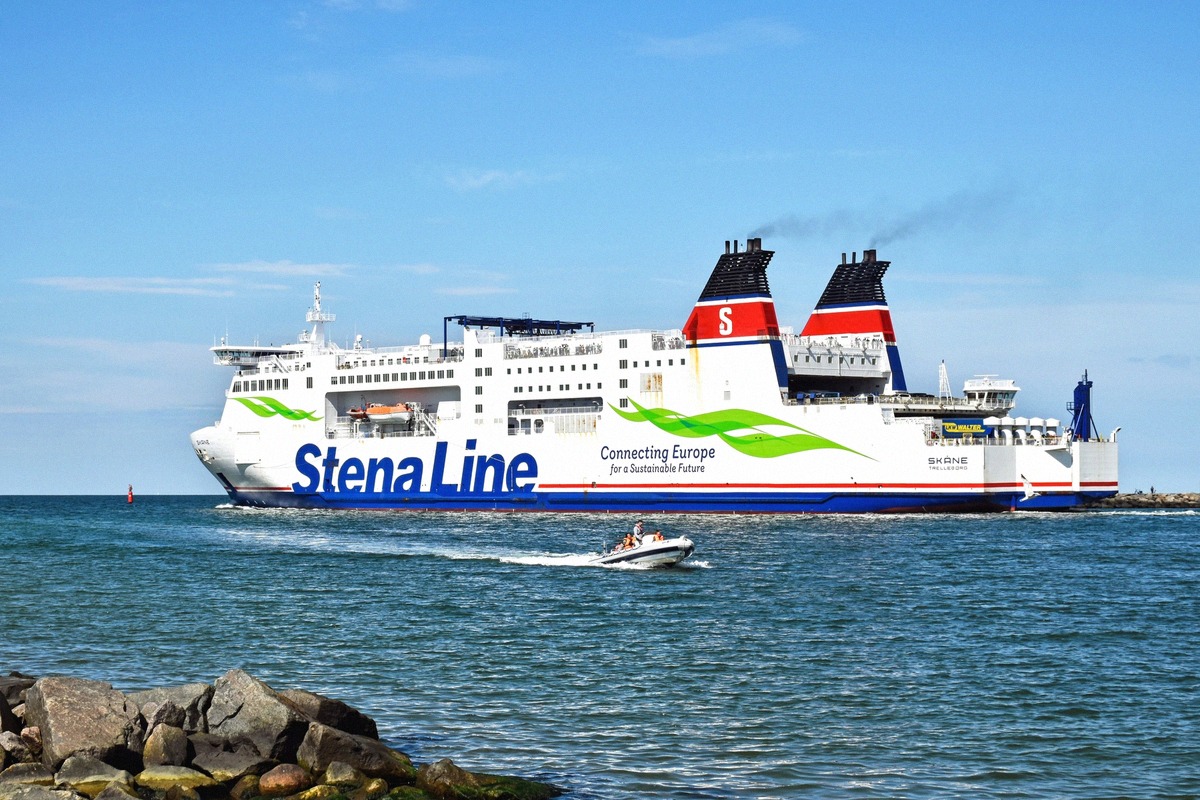
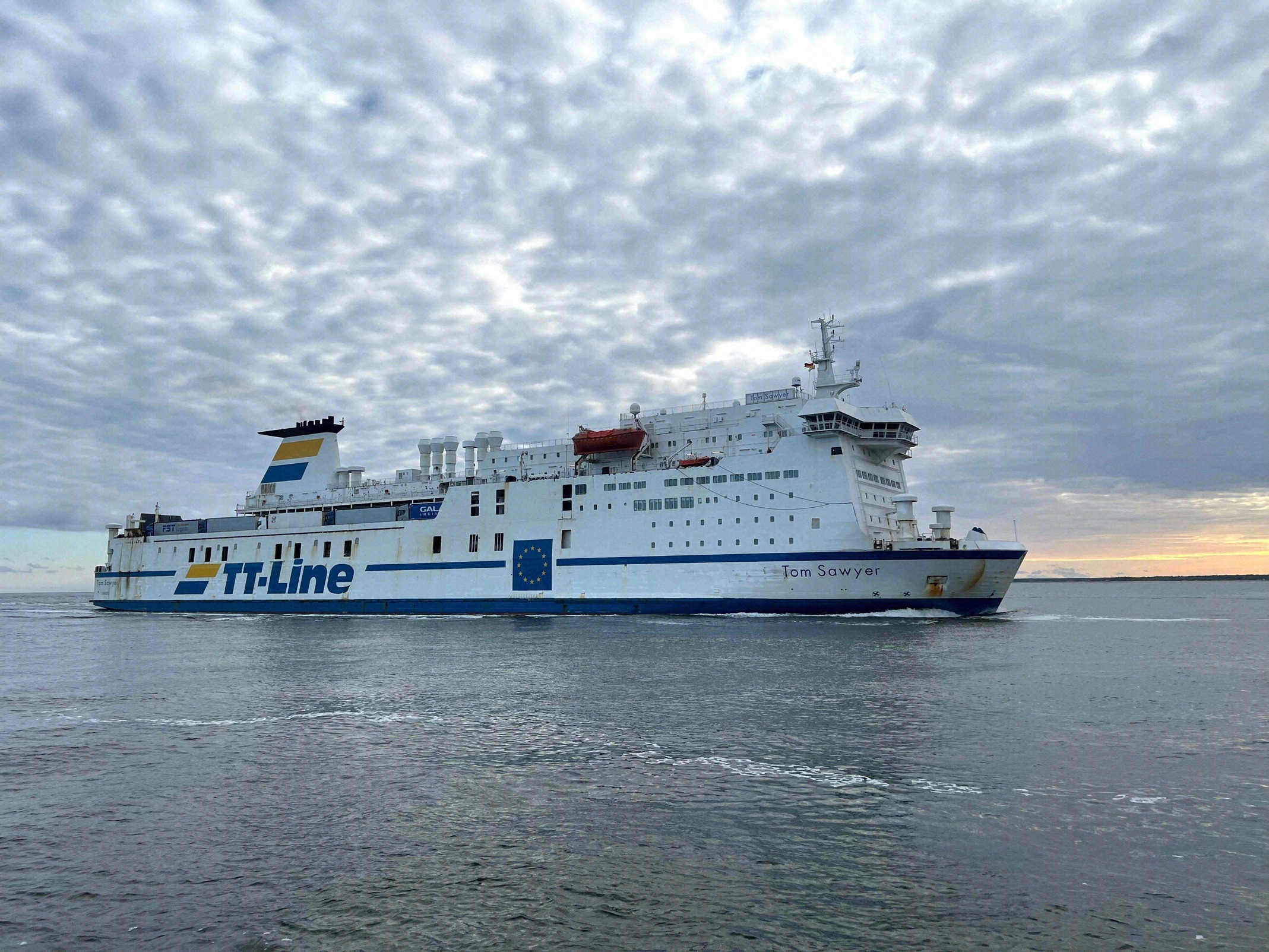
Stena Line operates the Mecklenburg-Vorpommern and the Skåne. With TT-Line, the ship can vary depending on the timetable. On board you'll find restaurants or cafés, a shop, seating areas and cabins in several categories.
Payment on board is by card: Stena Line's Mecklenburg-Vorpommern is a cashless ship and accepts credit and debit cards as well as Apple Pay and Google Pay; TT-Line also accepts cash in euros and Swedish kronor. Dogs and other pets can travel with both operators, but aren't allowed in restaurants, bars and shops. Stena Line has bookable pet cabins and kennels for this; TT-Line has its own pet cabins and exercise areas on deck. Register your pet when you book. To enter Sweden you'll need an EU pet passport with a valid rabies vaccination.
Day or night crossing
During the day, a reserved seat is usually enough; restaurants, lounges and outdoor decks make the crossing pass quickly. For a night crossing, a cabin is the more comfortable choice. Crossing time and the seat and cabin options vary by departure, so weigh up both together when comparing bookings.
Trelleborg terminal: arrival and onward travel
Both operators dock in Trelleborg on Norra Nyhamnsgatan: Stena Line at Terminal 1A, TT-Line right next door at 1b. It's about 30 kilometres to Malmö via the E22 and E6, and around 45 kilometres to Ystad via Route 9 and the E65. The Öresund region around Copenhagen is within easy driving distance, and you can reach the west coast around Gothenburg within a day's drive. If you're continuing towards Stockholm, an early arrival leaves you with a full day of travel ahead.
For the return crossing from Trelleborg: with Stena Line, vehicles check in at the terminal, while foot passengers and cyclists check in at Hamngatan 9 near the station, from where a terminal bus runs to the ship; vehicles 60 minutes and foot passengers 30 minutes before departure. The Stena terminal is open Monday to Friday from 05:15 to 23:45, Saturdays until 23:30 and Sundays from 06:30 to 23:00; payment is by Visa, Mastercard or Maestro only. With TT-Line, foot passengers check in at Kontinentplan 2 by the station, at least 45 minutes before departure, and take a shuttle to the ship; vehicles must be at the terminal 30 minutes beforehand. Parking: Stena Line offers chargeable short and long-stay parking at the terminal plus a drop-off and pick-up zone; TT-Line has no car park of its own, just a small public one nearby. Without a car, the Pågatåg train takes you from Trelleborg C to Malmö; it's under five minutes' walk from the station to check-in on Hamngatan.
Tickets and booking
What the crossing costs depends on the operator, departure, passengers, vehicle dimensions, and whether you choose a seat or a cabin. Compare Stena Line and TT-Line like for like, otherwise you'll be comparing a day seat with a night package that includes a cabin. The exact total for your travel date is shown in the booking window at the top of this page. You'll find further direct routes and land alternatives under Ferries to Sweden.
Rostock - Trelleborg
Direct from Rostock to southern Sweden
Rostock - Trelleborg links the Überseehafen directly with Sweden's south coast. Stena Line and TT-Line both run several day and night departures depending on the day; the exact travel time and the ship in use are shown in the timetable.
A day crossing works well with a reserved seat, while for a night crossing a cabin is the more comfortable choice. In Trelleborg you land straight in Skåne, saving the drive through Denmark and over the Öresund Bridge. Rostock's Überseehafen is connected to the motorway network via the A19 and A20.
- Crossing
- approx. 6 hrs
- Operator
- Stena Line & TT-Line
- Frequency
- up to 6x daily
- From
- €31
- TT-Line
- Stena Line
Next departures
FAQ
Frequently asked questions about the Rostock - Trelleborg ferry route
How long does the ferry crossing from Rostock to Trelleborg take? +
The crossing takes around 6 to 8 hours, depending on the departure. Day crossings are usually shorter than night crossings; the timetable shows the exact crossing time for your departure.
What does the Rostock - Trelleborg ferry cost? +
The total price depends on the operator, departure, number of passengers, vehicle dimensions, and whether you choose a seat or a cabin. So compare Stena Line and TT-Line like for like. You'll find the current total in the booking window; the price overview explains what it's made up of.
How often does the ferry run from Rostock to Trelleborg? +
Depending on the day of the week, up to six day and night departures are available. The split between Stena Line and TT-Line, as well as the times, change from one timetable period to the next. So check the timetable for your travel date rather than planning around a fixed time of day.
When do I need to check in at the Rostock ferry terminal? +
It depends on the operator. With Stena Line, check-in for vehicles closes 60 minutes and for foot passengers 30 minutes before departure. With TT-Line, you need to have checked in with your vehicle at least 30 minutes before departure.
If in doubt, get to the terminal earlier, especially in peak season and if you're travelling with a motorhome or trailer. The check-in time that applies to your booking is also shown on your ticket.
Do I need a cabin on the Rostock - Trelleborg ferry? +
On a day crossing, a seat is usually enough. For a night crossing, a cabin is the more comfortable choice; depending on the ship, reserved recliner seats are also an option. The booking window shows which options are available for your departure and what they cost.
Can I take my car on the Rostock - Trelleborg ferry? +
Yes. Cars, motorbikes, motorhomes and trailers can all be booked. Give the correct length and height, including any bike rack, roof box or trailer, as these dimensions determine the vehicle category and therefore the price.
Can I bring my pet on board? +
Yes, dogs and other pets can travel with both operators, but must be registered when you book. Animals aren't allowed in the restaurants, bars or shops.
On the Mecklenburg-Vorpommern and the Skåne, Stena Line has bookable pet cabins and kennels; TT-Line has its own pet cabins and exercise areas on deck. To enter Sweden you'll need an EU pet passport and a valid rabies vaccination. Our guide Travelling to Sweden with a dog sums up what Sweden requires.