Kiel - Gothenburg
With Stena Line overnight from Kiel to Gothenburg every day

From
€183
Timetable
Compare all ferry connections towards Stockholm and find the best route for your trip
Our most booked connections to Stockholm.
Prices for a car incl. driver, one way
© OpenStreetMap contributors
Route map: Stockholm
Interactive map of all ferry connections for travelling to Stockholm. Click a route for details.
Route guide
The table shows the right ferry for each starting point, the journey time from the arrival port to Stockholm, and the total duration of the crossing plus onward journey. Departure times are in the timetable, and prices in the price overview. All 31 routes to Sweden are compared on the Ferry routes to Sweden page.
| From where | Which route | Journey time from port | Total duration |
|---|---|---|---|
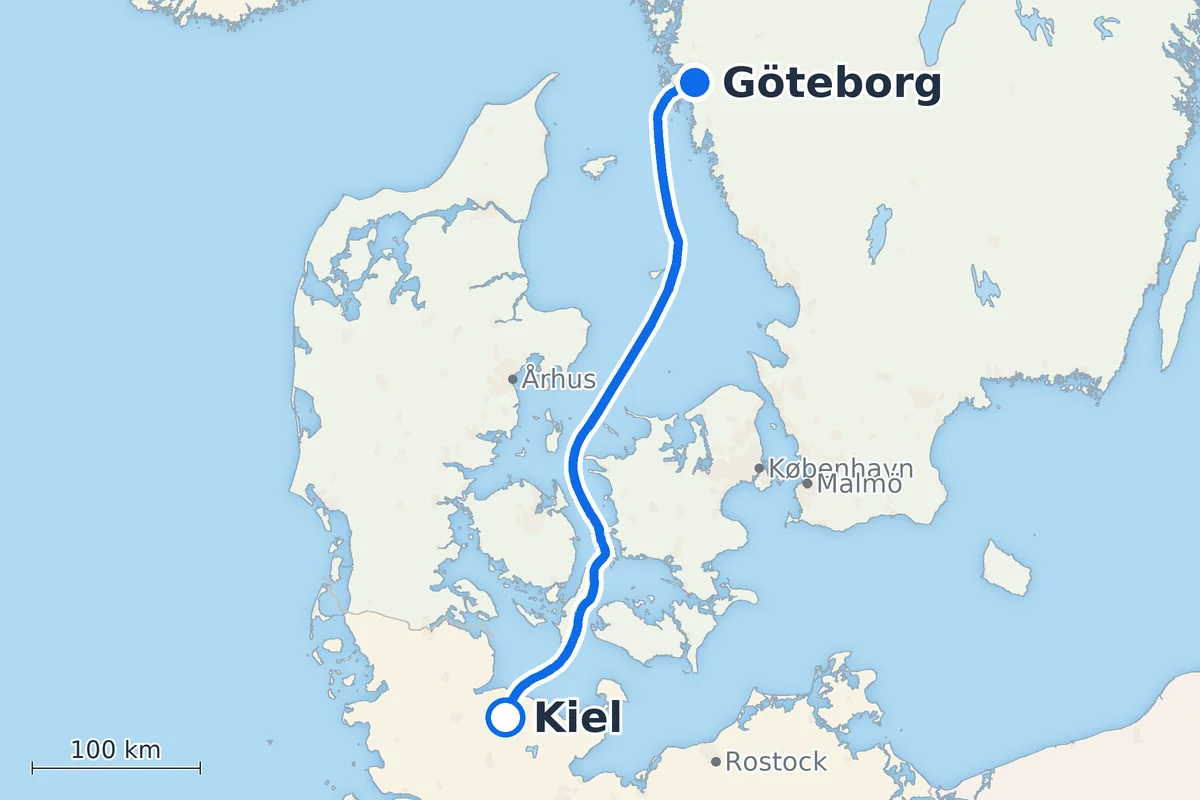
| Northern Germany, Kiel | Kiel - Gothenburg, Stena Line, overnight, 15.5 hours | 4.5 hours by car, just under 3 hours by train | around 20 hours |
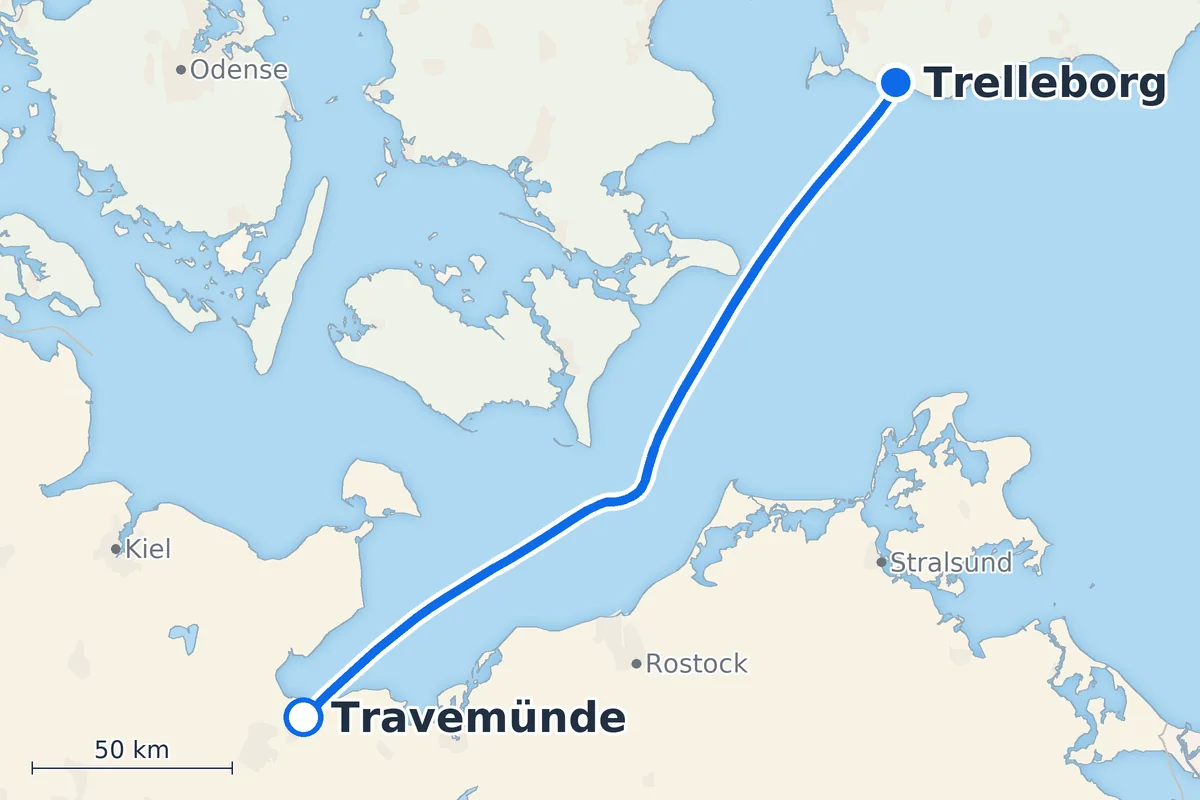
| Lübeck, Travemünde | Travemünde - Trelleborg, TT-Line, day and night | 6 hours from Trelleborg | around 15 hours |
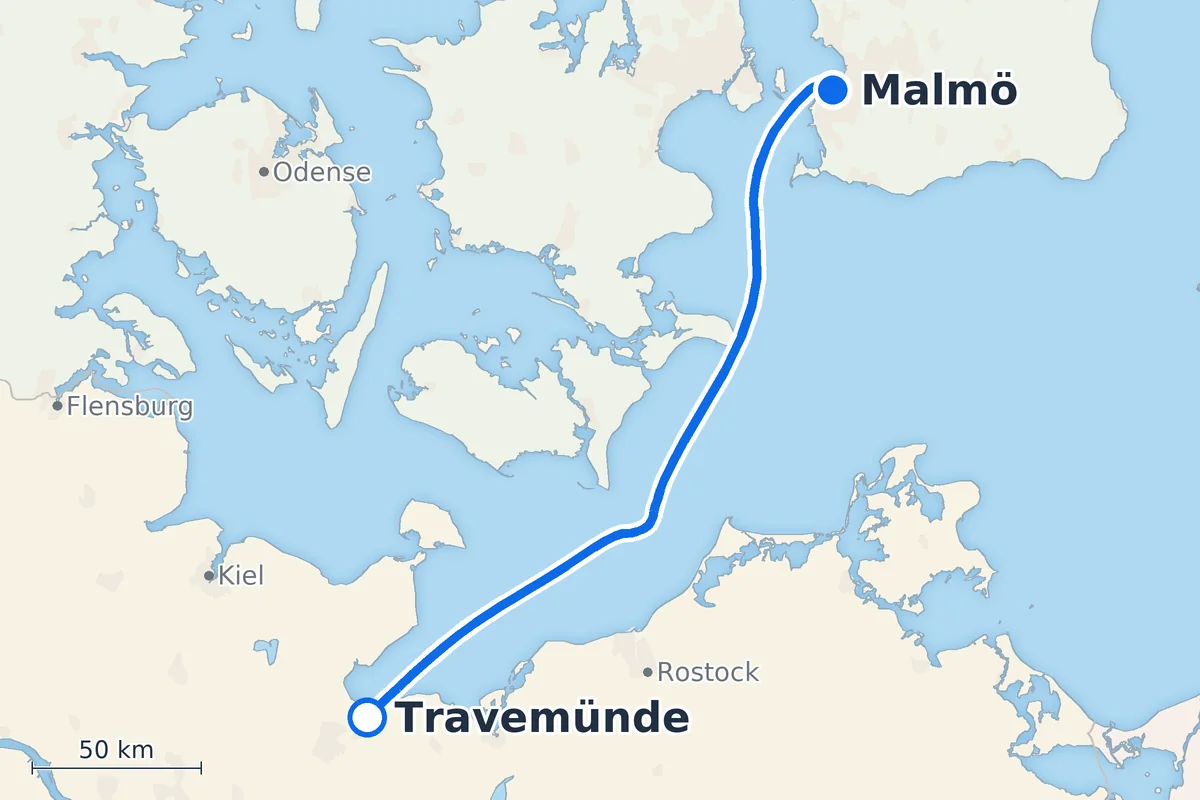
| Lübeck, Travemünde | Travemünde - Malmö, Finnlines, day and night | 5.5 hours by car, 4.5 hours by train | around 14.5 hours |
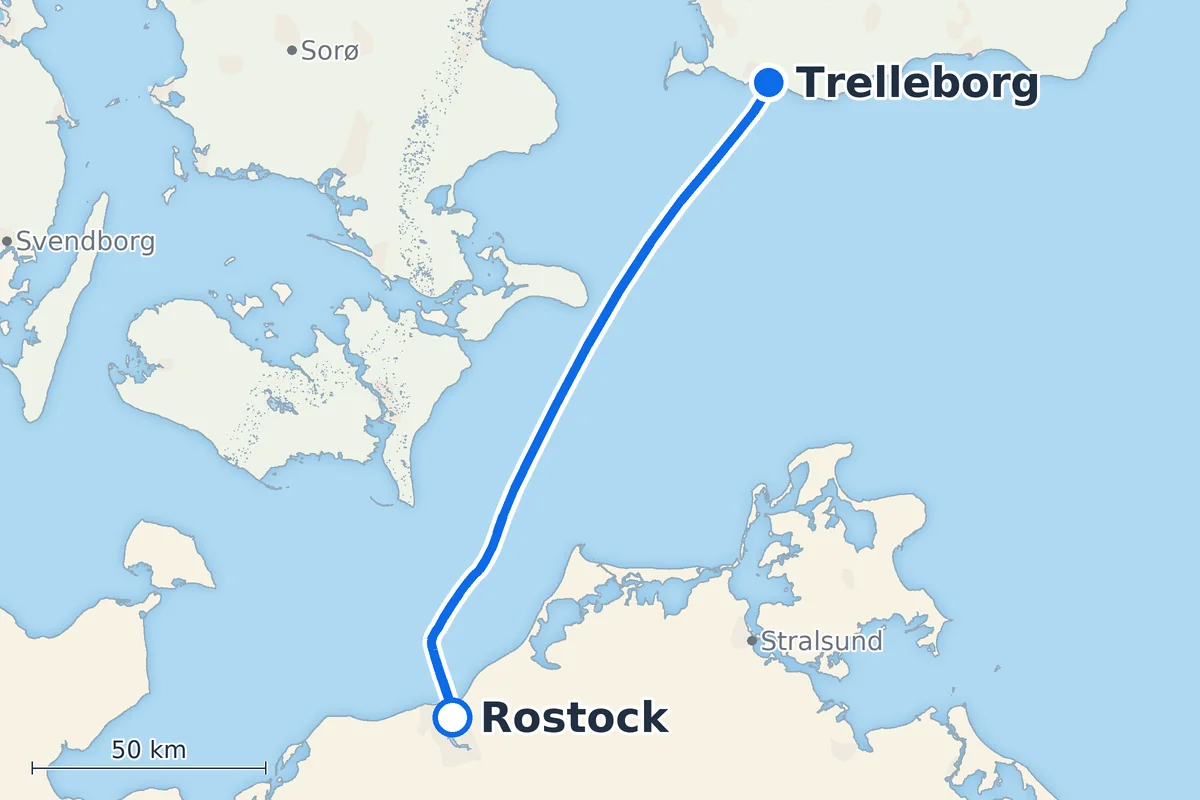
| Rostock | Rostock - Trelleborg, Stena Line and TT-Line, 6 to 8 hours | 6 hours from Trelleborg | 12 to 14 hours |
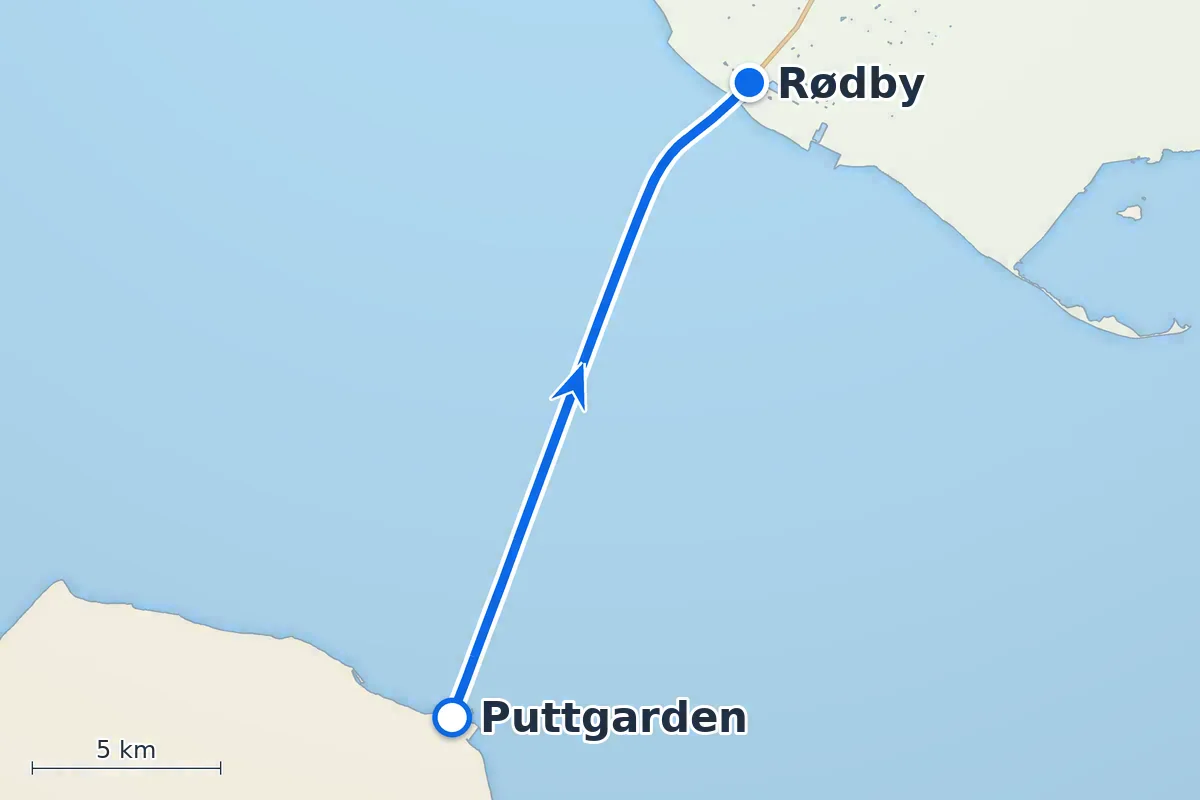
| Fehmarn, Puttgarden | Puttgarden - Rødby, Scandlines, 45 minutes, then the Öresund Bridge | around 8 hours from Rødby | just under 9 hours, plus the bridge toll |
| Rostock via Denmark | Rostock - Gedser, Scandlines, 2 hours, then the Öresund Bridge | around 8 hours from Gedser | around 10 hours, plus the bridge toll |
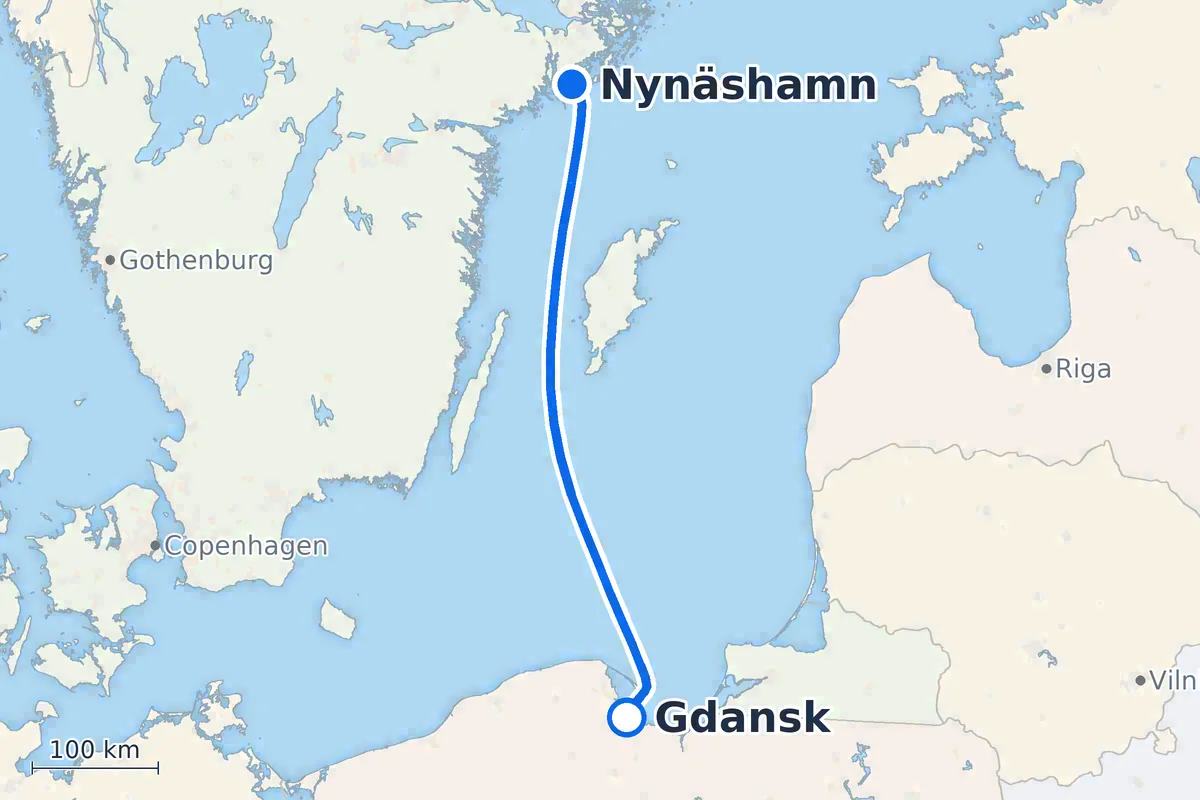
| Eastern Germany, Gdańsk | Gdańsk - Nynäshamn, Polferries, overnight, 18 hours | 60 km, around one hour by Pendeltåg | around 19 hours |
| Kiel via Norway | Kiel - Oslo, Color Line, overnight | 6 hours by car, 5.5 hours by fast train | one night plus half a day |
| Finland, Estonia, Åland | Helsinki, Turku, Tallinn - Stockholm, Viking Line and Tallink Silja | Arrival right in the city | just the crossing |
There's sadly no longer a direct ferry connection from Germany to Stockholm: the popular route from Rostock was discontinued in 2023 because of high costs.
However, there are plenty of good alternatives for crossing the Baltic by ferry and then continuing on to Stockholm by car, bicycle or train.
Depending on whether you're travelling from the south, west or east of Germany, the following routes and ferry connections are worth considering:
The classic, and for many the most popular route: the Swedish operator Stena Line sails daily overnight from Kiel to Gothenburg. The big advantage: you save a lot of time and arrive rested in Gothenburg in the morning. The onward journey by car from Gothenburg to Stockholm takes only around 4 hours 30 minutes, and by train just under 3 hours.
The Lübeck-based operator TT-Line (named after the initial letters of the two ports it connects, Travemünde and Trelleborg) sails the Travemünde → Trelleborg route several times a day. The crossing is possible both by day and overnight. The onward drive from Trelleborg to Stockholm takes around 6 hours.
The Finnish operator Finnlines sails three times a day from Travemünde to Malmö and back. The approach to Malmö, passing right under the Öresund Bridge, is especially striking. The onward journey to Stockholm takes around 5 hours 30 minutes by car, or only around 4 hours 30 minutes by train.
Up to six ferries sail daily from Rostock to Trelleborg. TT-Line and Stena Line have sailed this route separately since September 2018, so always check prices with both operators. Until 2012 the route was run by Scandlines. The onward drive from Trelleborg to Stockholm takes around 6 hours.
A popular route to Stockholm is to cross by ferry to Denmark and continue via the Öresund Bridge to Malmö. The operator offers combined tickets covering both ferry routes to Denmark plus the Öresund Bridge crossing.
The classic "Vogelfluglinie" (bird flight line) from Hamburg to Copenhagen follows the flight path of cranes, which is how it got its name. The ferry crossing from Puttgarden (on the island of Fehmarn) to Rødby (on the Danish island of Lolland) takes only 45 minutes, and the onward journey from Rødby via the Öresund Bridge to Stockholm takes around 8 hours.
An alternative route runs from Rostock to Gedser on the Danish island of Falster. Here too, the onward journey via the Öresund Bridge to Stockholm takes around 8 hours.
If you're travelling from eastern Germany, from Berlin for example, this connection could be an alternative for you. The Polish operator Polferries sails several times a week from Gdańsk to Nynäshamn, around 60 km south of Stockholm. The crossing takes about 18 hours. Nynäshamn is connected to Stockholm's commuter rail network via the Pendeltåg. From Berlin, you reach Gdańsk by car in around 6 hours.
Ideal for anyone who also wants to visit the Norwegian capital, Oslo. Color Line sails daily overnight from Kiel to Oslo. The connection has existed since 1961 and is the only direct link between Germany and Norway. The onward drive from Oslo to Stockholm takes around 6 hours, and the direct fast train only 5.5 hours.
A truly special experience is the crossing with the Finnish operator Finnlines from Travemünde to Helsinki. Once there, you can hop straight onto the next ferry from Helsinki to Stockholm.
The only ferries that actually dock in Stockholm come across the northern Baltic. Viking Line and Tallink Silja sail every night from Helsinki and several times a day from Turku to the Swedish capital, each calling at Mariehamn or Långnäs on Åland along the way. From Estonia, Tallink Silja sails overnight from Tallinn to Stockholm. The Värtahamnen and Stadsgården terminals lie within the city, with connections to the Tunnelbana and the Pendeltåg.
| Port | Location and onward travel | Operators and routes |
|---|---|---|
| Stockholm, Värtahamnen and Stadsgården | within the city; Tallink Silja at Värtahamnen, Viking Line at Stadsgården on Södermalm; connections to the Tunnelbana and Pendeltåg | Helsinki - Stockholm, Turku - Stockholm, Tallinn - Stockholm, Mariehamn - Stockholm, Långnäs - Stockholm |
| Nynäshamn | around 60 km south, around an hour to Stockholm by Pendeltåg | Polferries Gdańsk - Nynäshamn, Stena Line Ventspils - Nynäshamn |
| Kapellskär | around 90 km north on the E18, or by SL bus 631 via Norrtälje without a car | Finnlines Naantali - Kapellskär and Långnäs - Kapellskär, DFDS Paldiski - Kapellskär |
Location, routes and operators for all Swedish ports are compared on the Ferry ports in Sweden page.
Operators' prices follow supply and demand, so it's often noticeably cheaper to book some time in advance. In peak season, popular dates (such as the start of the summer holidays) are often booked out early. Either way, it's worth comparing prices across the different routes, as there are often big differences. And why not try a different route for once?
FAQ: Ferries to Stockholm
Questions and answers about the ferry connections towards Stockholm.
No. The last direct connection from Rostock was discontinued in 2023 because of high costs. Today you reach Stockholm by taking a ferry to a neighbouring country and continuing by car or train. The ferry from Gdańsk to Nynäshamn, south of Stockholm, gets you closest.
The Polish operator Polferries sails several times a week from Gdańsk to Nynäshamn, around 60 km south of Stockholm. The crossing takes about 18 hours. From Berlin, you reach Gdańsk by car in around 6 hours.
Nynäshamn is connected directly to Stockholm's commuter rail network via the Pendeltåg. So from the ferry port you continue into the city centre without changing trains. That's handy if you're travelling without a car.
The most popular is the overnight ferry from Kiel to Gothenburg with Stena Line. From Gothenburg it's only around four and a half hours by car or just under three hours by train to Stockholm. Prices for all routes are on our price overview.