
Guide
Taking a Motorhome to Sweden
All ferry routes for motorhomes compared: vehicle dimensions, cabin rules and crossing tips
- All motorhome routes: TT-Line, Stena Line, Finnlines & Scandlines
- Vehicle dimensions, cabin rules, gas bottle rules and pitch tips
- Length surcharge from 6 metres, TT-Line's camper package reduces it
Vehicle dimensions & rules
What you need to know about your motorhome
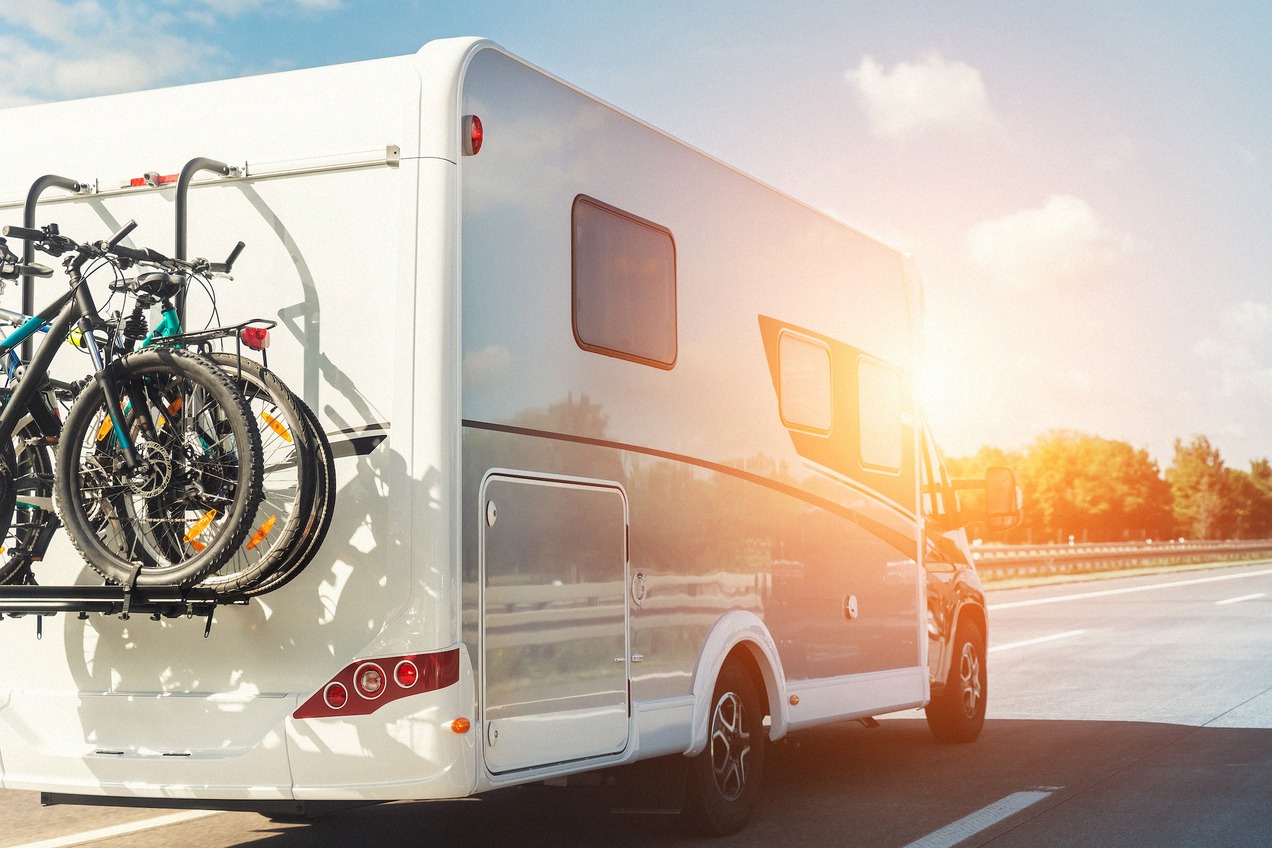
When you book, it's the total length including all fittings (bike rack, tow bar) that determines the price. Just a few centimetres can cause problems at check-in.
Maximum length
Maximum height
Gas bottles
Cabin required
Route comparison
Motorhome ferries to Sweden compared
Crossing time, cabin requirements and destination region for each motorhome route, at a glance. Current fares for each route are on the prices page.
Routes, crossing times and cabin requirements
Scroll table sideways
Table of Contents
Taking a motorhome to Sweden only works by ferry: either directly across the Baltic from Rostock, Travemünde or Kiel, or via Denmark and the Öresund Bridge. The price depends mainly on the vehicle's length and height. From around six metres in length, most operators charge a length surcharge, staggered by the metre. This page compares the routes for motorhomes, the operators' size rules, and the practicalities on board and in Sweden: gas bottles, pitches, tolls. For fares on each route, see the prices page.
Routes for motorhomes
Four operators can take your motorhome to Sweden. Which route suits you depends less on the ticket price than on your destination: for Skåne and southern Sweden, the shortest way is via Trelleborg or Malmö; for Gothenburg and the west coast, via Kiel. The timetable shows which departures are available on your travel date.
Cheapest: Rostock - Trelleborg
The shortest direct route to Sweden, operated by TT-Line and Stena Line. The crossing takes around six hours, and you don't need a cabin during the day. That usually makes this route the cheapest option for motorhomes. With TT-Line, the camper package cuts the length surcharge by up to 50 percent, which pays off especially for longer vehicles.
Overnight to Skåne: Travemünde - Trelleborg
TT-Line sails from Travemünde to Trelleborg in seven to nine hours, both by day and by night. On night departures a cabin is mandatory; in return, you save a night's hotel stay and start the morning refreshed in southern Sweden.
Plenty of headroom: Travemünde - Malmö
Finnlines takes around nine hours to Malmö and allows the greatest vehicle height of any direct route, at 4.4 metres. This is the route for tall vehicles and roof fittings that fall foul of the height limit elsewhere. Sailings are mostly in the evening and at night, when a cabin is included. With a pet on board it's mandatory anyway.
Arrive rested on the west coast: Kiel - Gothenburg
The night ferry from Stena Line is the longest crossing, at around 14.5 hours, and the only one with a cabin required throughout: the vehicle deck stays closed for the whole crossing. In return, you save around 500 kilometres of driving compared with the route via Trelleborg, and arrive directly in Gothenburg in the morning. For western Sweden, central Sweden and onward travel north, this is the most relaxed option.
Via Denmark: Puttgarden - Rødby and Rostock - Gedser
Scandlines crosses the Fehmarn Belt in 45 minutes. From Rødby, you continue through Zealand and across the Öresund Bridge, around two and a half hours in total to southern Sweden. There are no cabins on this route; the ferry runs every half hour during the day. The ferry fare itself is low, but the bridge toll comes on top.
From Berlin and eastern Germany, the longer ferry from Rostock is often the more convenient choice, since it saves two hours of driving through Denmark:
You book both variants as a combined ticket, so ferry and bridge are covered in a single booking. Whether that works out cheaper than two separate bookings is shown on the prices page.
If a dog is travelling with you, pet cabins and entry rules also come into play. The details are in the guide Travelling to Sweden with a dog.
Vehicle dimensions and booking
You book online with the operator. The vehicle's dimensions determine the price, so state them precisely.
Getting the dimensions right
Motorhomes are sorted into length categories. The usual limits:
- Length: 10 to 12 metres can be booked online. Longer vehicles and vehicle-and-trailer combinations are usually handled by phone through the freight department.
- Height: 4.0 metres with Stena Line, up to 4.4 metres with Finnlines. Roof fittings count towards this.
- Width: 2.55 to 2.6 metres.
State the total length including all fittings: bike racks, rear garages and tow bars all count. Just a few centimetres' difference can cause problems at check-in.
Fare tiers
Most operators offer three fare tiers:
- Economy or Special: the cheapest fare. Rebooking costs extra, no cancellation.
- Flexi or Smart: free rebooking, cancellation for a small fee.
- Premium: free cancellation up until shortly before departure.
What each tier costs per route, and how much the peak season from June to August pushes up prices, is on the prices page.
Preparing your motorhome
On the direct ferries, the vehicle deck is closed during the crossing. Anything you need on board has to come out of the motorhome beforehand.
What to bring on board
- Overnight things and a wash bag for night crossings
- ID or passport, booking confirmation and valuables
- Chargers, electronic devices and medication
Gas bottles and keeping things cool
For safety reasons, gas bottles must be fully turned off before boarding. The gas locker stays unlocked so crew can check it. A tamper seal is attached at check-in.
Since the fridge won't run without gas, a simple trick helps: set the fridge to maximum power 24 hours before departure and let cooling packs freeze solid. Put them in the fridge compartment just before boarding. Some ferries offer power hook-ups on the vehicle deck.
Before you leave your vehicle
Secure any loose items inside, since the ship moves. And take a photo of your parking spot on the vehicle deck: the markings next to doors and lifts make it easier to find your way back.
On the road in Sweden with a motorhome
Wild camping and pitches
The right to roam (Allemansrätt) does not apply to motor vehicles. One night is usually allowed at public car parks and rest areas, as long as you don't set up camp: no tables, no chairs, no awning extended. In the sparsely populated north, suitable spots are easier to find; wild camping is banned altogether on Gotland. The network of dedicated motorhome pitches (ställplats) and campsites is dense and well equipped.
Tolls and traffic rules
Sweden charges no general motorway toll. Only Stockholm and Gothenburg have an electronic congestion charge (Trängselskatt): your number plate is captured automatically and the bill arrives later via Epass24. It applies on weekdays from 06:00 to 18:29 and runs from 9 to 45 SEK depending on the time of day (as of 2026). Weekends, public holidays and the whole of July are toll-free.
From 1 December to 31 March, winter tyres are mandatory in wintry road conditions: at least 3 mm tread up to 3.5 tonnes, 5 mm above that. The trailer is often overlooked: it too needs winter tyres with the alpine symbol (3PMSF) from 750 kg upwards. You must also carry a snow shovel during this period.
Gas bottles on the road
German grey gas bottles can't be exchanged in Sweden, but LPG specialists can refill them, provided the bottle's inspection is no more than ten years old. Alternatively, take a Swedish rental bottle with a Euro adapter set, which many petrol stations will exchange. Filling stations are scarce in the north, so plan your supply ahead of time.
Frequently asked questions
FAQ: taking a motorhome to Sweden
The key questions about the motorhome ferry to Sweden, answered concisely.
Which ferry route is cheapest for motorhomes? +
Usually TT-Line from Rostock to Trelleborg: a short crossing, and no cabin needed on day departures. On top of that, the camper package cuts the length surcharge by up to 50 percent, which makes a real difference for longer vehicles. The route via Denmark (Puttgarden - Rødby, then the Öresund Bridge) is also cheap on ferry fare alone, though the bridge toll comes on top. Current fares for each route are on the prices page.
Do I have to book a cabin on the ferry? +
It depends on the route and departure time: on Kiel - Gothenburg, a cabin is always required, because it's a night crossing and the vehicle deck stays closed. With TT-Line from Travemünde, a cabin is required for night departures. On the short Rostock - Trelleborg crossing, you don't need a cabin during the day. With Finnlines, a cabin is mandatory on night sailings and when travelling with a pet.
How big can my motorhome be? +
Maximum vehicle height is 4.0 metres with most operators (Stena Line), while Finnlines allows up to 4.4 metres. Motorhomes up to 10-12 metres in length can be booked online; longer vehicles and vehicle-and-trailer combinations are usually handled by phone through the freight department. Important: state the total length including all fittings when you book.
What happens to my gas bottles on the ferry? +
Gas bottles must be turned off, and the gas locker must stay unlocked. A tamper seal is attached when you board. Since the fridge doesn't run on gas during the crossing, it's best to set it to maximum power 24 hours beforehand and put in fully frozen cooling packs. Some ferries offer power hook-ups on the vehicle deck.
Can I camp freely in Sweden with my motorhome? +
The right to roam (Allemansrätt) explicitly does not apply to motorhomes: motor vehicles can't leave paved roads. You're allowed to park at public car parks and rest areas, usually for one night, as long as you don't set up camp (no tables, chairs, or awnings extended). In the sparsely populated north, suitable spots are easier to find. Wild camping is banned altogether on Gotland.
Can I exchange my gas bottles in Sweden? +
No, German grey gas bottles can't be exchanged in Sweden. Refilling is possible at LPG specialists, provided the bottle's inspection is no more than ten years old. Alternatively, take a Swedish rental bottle (for example from AGA) with a Euro adapter set, which many petrol stations will exchange. Filling stations are scarce in the north, so plan your supply ahead of time.
Do I need a special driving licence for my motorhome? +
For motorhomes up to 3.5 tonnes, a category B licence is enough. From 3.5 to 7.5 tonnes you need category C1. For vehicle-and-trailer combinations: category B covers up to 3,500 kg combined weight, B96 up to 4,250 kg (a one-day course, no test), and BE up to 7,000 kg. Holders of an old category-3 licence (issued before 1999) may drive combinations up to 7,500 kg.
Are there tolls in Sweden? +
Sweden charges no general motorway toll. Only Stockholm and Gothenburg have an electronic congestion charge (Trängselskatt): your number plate is captured automatically and the bill arrives later via Epass24. It applies on weekdays from 06:00 to 18:29 and runs from 9 to 45 SEK depending on the time of day (as of 2026). Weekends, public holidays and the whole of July are toll-free.
Do I need winter tyres in Sweden? +
From 1 December to 31 March, winter tyres are mandatory in wintry road conditions. Minimum tread depth is 3 mm up to 3.5 tonnes and 5 mm above that. Often overlooked: winter tyres with the alpine symbol (3PMSF) are also required on trailers over 750 kg. You must also carry a snow shovel during this period.
Can I bring my car or motorhome? +
Yes, every route to Sweden is served by car ferries. Cars, motorhomes, caravans, motorbikes and bicycles are all carried on board. The vehicle fare is based on length; a bike rack or roof box can easily push you into the next category, so measure honestly when you book.
On the Travemünde - Malmö route, Finnlines will connect your motorhome to the power supply during the crossing for a small fee, so the fridge keeps running.
How much luggage can I bring on the ferry? +
There's no fixed baggage limit like on a plane. If you're travelling with a vehicle, you bring as much as fits in it; your luggage stays in the locked vehicle on the car deck during the crossing. As a foot passenger, you carry what you can carry yourself; there's no baggage check-in.
Important: the vehicle decks are closed off during the crossing. Take anything you'll need on board out of the vehicle beforehand: medication, valuables, travel documents, and on long crossings toiletries and a change of clothes too.
Can I get to my car during the crossing? +
No. For safety reasons, all passengers must leave the vehicle decks before the ferry casts off. The crew locks them, and access isn't reopened until shortly before docking, announced over the tannoy. Until then, you stay on the passenger decks, in your cabin, in the restaurant or in the lounge areas.
The same applies to pets: on the long routes such as Kiel - Gothenburg and Travemünde - Malmö, animals aren't allowed to stay in the vehicle, so you'll need a pet cabin. On short crossings, some operators do allow the dog to stay in the car. Check this before you book.
Ready for your motorhome trip to Sweden?
Compare the routes for your motorhome, check the next departures and book directly with the operator.